Sound Healing & Vibrational Wellness
Restore Balance. Regulate the Nervous System. Reconnect with Yourself.
At the Westchester Institute for Transformative Support (WITS), we believe healing is more than talking about our experiences—it is also about creating opportunities for the body and nervous system to experience safety, regulation, and restoration. Our Sound Healing & Vibrational Wellness programs combine evidence-informed practices with mindfulness, breathwork, restorative facilitation, and Indigenous-informed principles to create immersive experiences that promote relaxation, self-awareness, emotional well-being, and resilience.
Sound has been used across cultures for thousands of years as part of ceremony, meditation, community gatherings, and healing traditions. While modern sound healing is not a substitute for medical or mental health treatment, growing research suggests that music, rhythmic sound, vibration, and intentional listening can positively influence the nervous system, reduce stress, improve mood, and support emotional regulation.
Whether participants attend a community sound bath, a workplace wellness program, a restorative circle, or an individual wellness session, each experience is thoughtfully designed to create a calm, supportive environment where participants can slow down, reconnect with themselves, and practice mindfulness through sound.
The Science of Sound and the Nervous System
When we experience chronic stress or trauma, the body’s nervous system can remain in a heightened state of alertness. This may contribute to anxiety, muscle tension, racing thoughts, sleep difficulties, emotional reactivity, and difficulty concentrating.
Calming auditory experiences can help activate the parasympathetic nervous system—the body’s “rest and restore” response. Research has found that intentional music listening and sound-based relaxation practices may help:
- Reduce perceived stress and anxiety.
- Lower heart rate and blood pressure during relaxation.
- Improve mood and emotional well-being.
- Support mindfulness and present-moment awareness.
- Reduce muscle tension.
- Improve sleep quality.
- Enhance meditation and breath awareness.
- Promote feelings of connection and emotional safety.
Many of these effects are thought to occur through mechanisms such as rhythmic entrainment, focused attention, controlled breathing, and relaxation responses rather than through claims that specific frequencies “heal” disease. At WITS, we present sound healing as a complementary wellness practice supported by emerging research on stress reduction, nervous system regulation, and mindfulness.
Our Sound Healing Instruments
Every instrument creates a unique sensory experience. WITS carefully selects instruments that encourage relaxation, reflection, and mindful awareness.
Crystal Singing Bowls
Crystal singing bowls are crafted from high-purity quartz crystal and produce sustained, resonant tones with rich harmonic overtones. Their sound encourages deep listening and provides a stable auditory focus during meditation and relaxation practices.
Research suggests that sound meditation using singing bowls may be associated with reductions in stress, tension, anxiety, and negative mood while increasing feelings of spiritual well-being and relaxation. Participants often report feeling calmer, more grounded, and more present following sound bowl experiences.
Crystal bowls are commonly incorporated into:
- Sound baths
- Guided meditation
- Trauma-informed relaxation
- Mindfulness workshops
- Stress reduction programs
- Restorative circles
Tibetan Singing Bowls
Traditionally handcrafted from metal alloys, Tibetan singing bowls have been used for centuries within Buddhist contemplative practices. Their warm, layered tones encourage focused attention and mindful awareness.
The repetitive, sustained vibrations produced by singing bowls can help participants settle into slower breathing patterns and deepen meditation. Current evidence suggests that these practices may support relaxation and emotional regulation, although further research is ongoing.
Ocean Drum
The ocean drum is designed to recreate the soothing sounds of rolling ocean waves.
Nature sounds have consistently been associated with reductions in stress and improvements in mood and attention. The gentle rhythm of the ocean drum helps participants visualize calming environments, supports guided imagery exercises, and encourages nervous system relaxation.
The ocean drum is frequently used during:
- Guided visualization
- Trauma recovery groups
- Children’s programming
- Grief support
- Mindfulness sessions
Native-Style Frame Drum
Frame drums have been used by many Indigenous cultures around the world in ceremony, storytelling, community gatherings, and healing traditions. At WITS, we respectfully acknowledge that drum traditions vary greatly among Indigenous Nations and are not interchangeable. Our use of frame drumming is inspired by the universal role of rhythm in community connection while honoring the cultural origins of these practices.
Rhythmic drumming has been studied for its potential to:
- Promote group cohesion.
- Improve emotional expression.
- Reduce stress.
- Encourage mindfulness.
- Support emotional regulation.
- Foster social connection.
Drumming activates multiple regions of the brain simultaneously and combines movement, rhythm, breath, and social interaction into a shared experience that can strengthen feelings of belonging and resilience.
Chimes
Koshi chimes, Zaphir chimes, and other meditation chimes produce gentle harmonic tones that naturally capture attention without startling the listener.
Chimes are often used to:
- Begin or end meditation
- Transition between activities
- Encourage mindful breathing
- Signal moments of reflection
- Support grounding exercises
Their soft resonance helps participants gently return attention to the present moment.
Tuning Forks
Weighted and unweighted tuning forks produce precise tones that are sometimes incorporated into relaxation and mindfulness practices.
While tuning forks are widely used within complementary wellness settings, scientific evidence supporting claims that they directly heal physical illness remains limited. At WITS, tuning forks are used as tools for focused attention, sensory awareness, and relaxation rather than medical treatment.
Participants often experience tuning fork exercises as calming opportunities to slow breathing and become more aware of bodily sensations.
Rain Stick
The rain stick produces the soothing sound of falling rain.
Natural environmental sounds have been associated with reductions in stress and improvements in attention restoration. Rain sticks are frequently used during mindfulness exercises, visualization, children’s programming, and transitions between activities.
Wind Gong
The wind gong produces broad, resonant sound waves that gradually rise and fall in intensity.
Many participants describe the gong as creating an immersive listening experience that encourages deep relaxation and meditation. While individual responses vary, the gong’s sustained resonance can support mindful awareness and reflective practice when facilitated within a safe, structured environment.
Koshi Bells
Koshi bells produce delicate harmonic tones inspired by the elements of earth, air, fire, and water.
Their gentle sounds encourage mindful attention and often accompany guided meditation, gratitude practices, and restorative circles.
Shakers and Percussion Instruments
Hand percussion instruments such as seed shakers, egg shakers, rattles, and rhythm sticks encourage active participation rather than passive listening.
Participating in rhythmic music-making has been associated with increased social connection, emotional expression, stress reduction, and improved mood. Group percussion activities also promote cooperation, communication, and community building.
Breath, Voice, and Chanting
One of the most powerful sound healing instruments is the human voice.
Intentional humming, vocal toning, chanting, and rhythmic breathing naturally create vibration within the body while slowing respiration and increasing mindful awareness.
Research suggests these practices may:
- Improve vagal tone.
- Encourage slower breathing.
- Reduce perceived stress.
- Increase relaxation.
- Improve emotional regulation.
- Foster feelings of connection and presence.
Because the voice belongs to every participant, vocal practices are accessible tools that can continue long after the session ends.
What to Expect During a WITS Sound Healing Experience
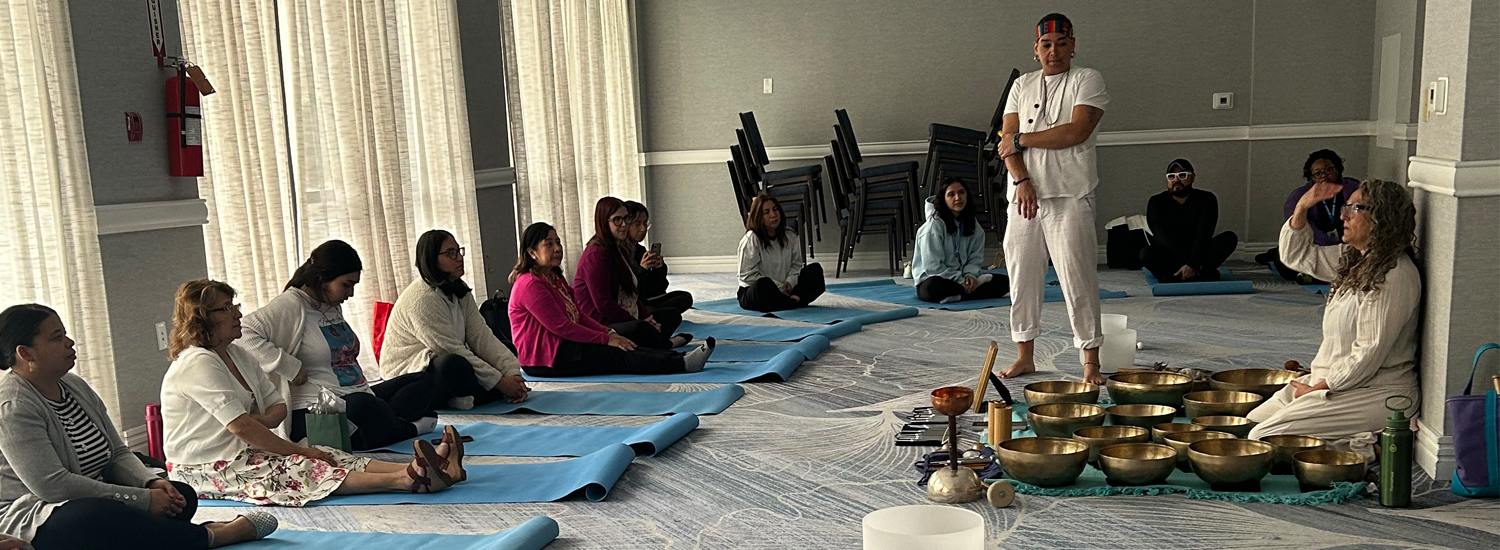
Every session is intentionally designed to create a welcoming and restorative environment. Participants may sit comfortably in chairs, rest on yoga mats, or use cushions and blankets while being guided through mindfulness exercises, breathing techniques, gentle meditation, and immersive sound experiences.
Sessions may incorporate:
- Breathwork
- Guided meditation
- Progressive muscle relaxation
- Somatic awareness
- Mindfulness practices
- Reflective journaling
- Restorative circle dialogue
- Sound immersion
- Gentle movement
- Gratitude practices
No prior experience is necessary. Participants are invited to engage at their own comfort level while honoring their individual needs and experiences.
Who Can Benefit?
Sound Healing & Vibrational Wellness programs can be adapted for a wide variety of settings, including:
- Community wellness programs
- Schools and universities
- Healthcare organizations
- Nonprofit organizations
- First responders
- Behavioral health providers
- Faith communities
- Corporate wellness initiatives
- Support groups
- Parent education programs
- Youth leadership programs
- Caregiver wellness
- Trauma recovery programming
Our Philosophy
At WITS, sound healing is not about achieving perfection or escaping life’s challenges. It is about creating intentional moments of stillness where the mind can quiet, the body can relax, and the nervous system can experience safety. We combine ancient traditions of rhythm, music, and community with contemporary understanding of neuroscience, mindfulness, and trauma-informed care to support whole-person wellness.
Every sound bath, drum circle, meditation, and restorative experience is rooted in our belief that healing grows through connection, presence, reflection, and community. By slowing down and listening—to sound, to ourselves, and to one another—we create space for restoration, resilience, and renewed possibility.