Shamanic Drum Circles: Healing Through Rhythm, Connection, and Restoration
Reconnecting Through the Ancient Language of Rhythm
Across cultures and throughout human history, drums have been used as instruments of connection, healing, ceremony, storytelling, celebration, and community building. A drum circle brings people together in a shared rhythmic experience where individuals move from isolation toward connection and from individual expression toward collective harmony.
At the Westchester Institute for Transformative Support (WITS), our drum circle programming incorporates trauma-informed, Indigenous-informed, and restorative practices to create spaces where participants can reconnect with themselves, each other, and the wisdom of ancestral healing traditions.
While many Indigenous cultures throughout the world have sacred relationships with drumming, WITS approaches this work with respect for the diversity of Indigenous traditions and recognizes that each community holds its own teachings, protocols, and meanings around the drum.
Our shamanic drumming practices focus on the therapeutic and restorative elements of rhythm, intention, mindfulness, connection, and embodied healing.
What Is a Drum Circle?
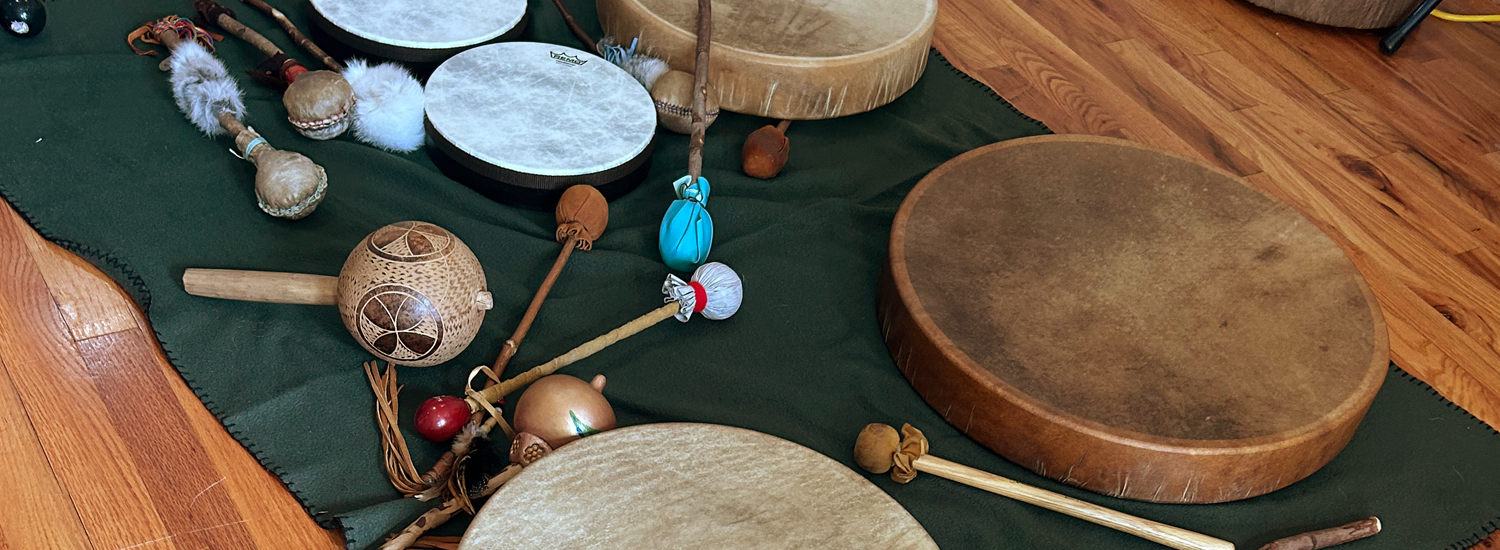
A drum circle is a gathering where participants come together to create collective rhythms using drums and percussion instruments. Unlike a performance where one person leads and others watch, a drum circle is based on participation, collaboration, and shared creation.
Everyone contributes to the rhythm, creating an experience where:
- Every voice matters
- Every participant has a role
- The group learns to listen and respond to one another
- Individual expression becomes collective harmony
The drum circle becomes a metaphor for community itself: when people listen, respect boundaries, and work together, something powerful is created.
What Is Shamanic Drumming?
Shamanic drumming refers to intentional rhythmic drumming practices that are often used for meditation, spiritual connection, grounding, reflection, and altered states of awareness.
Across many cultures, repetitive rhythmic patterns have been used to support:
- Connection with the natural world
- Spiritual reflection
- Ceremony and ritual
- Emotional release
- Community bonding
- Healing practices
In contemporary wellness and therapeutic settings, shamanic-inspired drumming may be used as a mindfulness and somatic practice to help individuals connect with their bodies, regulate their nervous systems, and access deeper states of relaxation and awareness.
Drum Circles and Restorative Justice
Restorative justice centers on the belief that healing happens through relationship, accountability, repair, and community connection. Rather than focusing only on punishment, restorative approaches ask:
Who was harmed?
What are the impacts of harm?
What is needed to repair relationships?
How can the community support healing and accountability?
Drum circles align with restorative justice values because they create opportunities for:
Building Community
Drum circles create shared experiences where participants practice trust, cooperation, and belonging. They help break down barriers between individuals and strengthen community relationships.
Restoring Voice
Many people impacted by trauma, violence, oppression, or marginalization experience feeling unheard or disconnected. Drum circles provide a nonverbal way to express emotions, experiences, and identity.
Practicing Accountability and Listening
Participants learn to listen to the rhythm of others, adjust their own participation, and recognize how individual actions affect the collective group.
Repairing Relationships
Shared rhythmic experiences can help rebuild connection between individuals and groups by creating moments of empathy, understanding, and mutual respect.
Supporting Community Healing
Restorative justice recognizes that harm impacts not only individuals but entire communities. Drum circles provide a collective healing experience that honors shared humanity.
Uses of Drum Circles in Healing and Community Programming
Drum circles can be used in many settings, including:
Trauma Recovery
Drumming can support trauma recovery by helping participants reconnect with their bodies, release stress, and develop grounding skills.
Potential benefits include:
- Increased body awareness
- Improved emotional regulation
- Reduced stress responses
- Greater sense of safety
- Increased connection to self and others
Domestic Violence and Survivors’ Programming
For survivors of violence, drumming can provide:
- A safe form of expression
- A way to reconnect with personal power
- Opportunities for community support
- A pathway toward rebuilding trust and identity
Men’s Healing and Accountability Programs
Drumming can support programs focused on healthy masculinity by creating opportunities for men to:
- Practice vulnerability
- Build emotional awareness
- Develop connection with others
- Explore responsibility and repair
- Move beyond isolation and shame
Youth Development
For children and youth, drum circles can support:
- Self-expression
- Confidence
- Teamwork
- Emotional regulation
- Cultural connection
Positive peer relationships
Reentry and Community Reintegration
For individuals returning to the community after incarceration, drum circles can support:
- Belonging
- Identity development
- Emotional processing
- Community connection
- Positive relationships
Other Applications
Grief and Loss Support
Rhythm can provide a container for grief by allowing individuals to express emotions that may be difficult to communicate through words.
Workplace Wellness and Team Building
Drum circles can strengthen organizations by developing:
- Communication skills
- Collaboration
- Creativity
- Stress reduction
- Team connection
Cultural Identity and Ancestral Connection
Drumming can support cultural reclamation by helping individuals reconnect with:
- Heritage
- Community traditions
- Ancestral memory
- Cultural pride
Benefits of Shamanic Drumming
Nervous System Regulation
Rhythm can support relaxation and grounding by helping individuals move out of heightened stress responses and into states of calm and connection.
Emotional Expression
Drumming provides a healthy outlet for emotions, allowing participants to express feelings through movement, sound, and rhythm.
Mindfulness and Presence
The repetitive nature of drumming encourages participants to focus on the present moment and develop awareness of their internal experiences.
Connection and Belonging
Creating music together builds relationships and reminds participants that healing does not happen in isolation.
Empowerment
The act of creating sound allows participants to experience agency, confidence, and personal expression.
Somatic Healing
Because drumming is experienced through the body, it supports embodied healing by engaging movement, breath, sensation, and awareness.
Stress Reduction
Rhythmic practices may promote relaxation, decrease tension, and support overall emotional wellness.
The Drum as a Symbol of Connection
Across many traditions, the drum represents the heartbeat—the reminder that all living beings are connected.
In a drum circle, participants practice the values that support healing communities:
- Listening
- Respect
- Reciprocity
- Compassion
- Cooperation
- Presence
- Shared responsibility
At WITS, drum circles are not simply musical experiences. They are opportunities for restoration, connection, identity exploration, and collective healing.
When we find the rhythm together, we remember that we belong together.